
Dental Crowns & Bridges
Dental Crowns & Bridges: Applications Before-and-After Contact Us
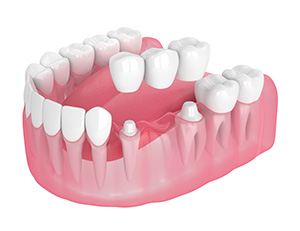
What are dental crowns and bridges?
Dental crowns are tooth-shaped caps that are placed over a tooth to restore its shape, size, strength, and improve its appearance. They are typically used to cover a damaged or decayed tooth, restoring its function and aesthetics.
Overall, dental crowns are a versatile restorative option that can be used for various dental issues to restore the health, function, and aesthetics of a tooth.
Dental bridges are dental prosthetics used to replace one or more missing teeth by bridging the gap between two teeth. They consist of artificial teeth (pontics) held in place by natural teeth or dental implants on either side of the gap.
Dental crowns may be indicated in the following siuations:
To protect a weak tooth
Crowns are often used to protect a tooth that is weakened by decay, cracks, or large fillings. They provide support and prevent further damage.
To restore a broken or damaged tooth
If a tooth is fractured or otherwise damaged, a crown can be placed over it to restore its shape, size, and function.
To cover a tooth with a large filling
When a tooth has a large filling and there isn’t enough natural tooth structure left, a crown may be placed to provide support and prevent the tooth from fracturing.
To cover a dental implant
Crowns are often used to cover dental implants, which are artificial tooth roots used to replace missing teeth.
To improve the appearance of a tooth
Crowns can also be used for cosmetic purposes to improve the shape, color, or alignment of a tooth.
To protect a tooth after a root canal
After a root canal procedure, a crown is often placed over the treated tooth to protect it and restore its function.
Dental bridges may be indicated in the following siuations:
To replace missing teeth
Dental bridges are used to fill in the gap left by one or more missing teeth, restoring the ability to chew properly and improving the aesthetics of the smile.
To prevent shifting of adjacent teeth
When a tooth is missing, the adjacent teeth may shift or tilt into the empty space, leading to alignment issues. A dental bridge helps maintain the proper alignment of the teeth.
To restore chewing and speaking functions
Missing teeth can affect the ability to chew food properly and speak clearly. Dental bridges help restore these functions by replacing the missing teeth.
To improve the appearance of the smile
Bridges can enhance the appearance of the smile by filling in gaps and giving a natural-looking result.
To distribute the forces of chewing
By replacing missing teeth with a bridge, the forces of chewing are distributed evenly across the remaining teeth, reducing the stress on individual teeth.
From the Blog
Read the latest news, insights, and updates.

The Secret to Lifelong Teeth Whitening
Sep 27, 2023 | Comprehensive Dental Care, Cosmetic Dentistry
Have you ever noticed your attention being instantly drawn to peoples’ teeth when they smile at you? Some people have dull and yellowing teeth, while others have teeth that appear bright white. Everyone’s teeth naturally dull over time because of aging and the contact...
"*" indicates required fields
PATIENT INFORMATION
What You Can Expect
On Your First Visit
Individualized care, experience you can trust, and a personalized plan to attain the smile of your dreams.
TESTIMONIALS
Rated 5 out of 5 stars on Google